
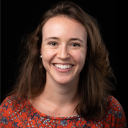
Dr. Sarah Evans, collaborators to share research during NSF "Live from the Arctic" webinar
May 9, 2023
"Live from the Arctic: The Frozen Tundra" featuring Dr. Sarah EvansTuesday, May 30, 2023, at 1 p.m. ESTZoom link available upon registration here.BOON...
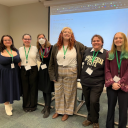
Three Honors College students present at the DLLC Symposium 2023 — Diversity and (Dis)Connections in the Contemporary Context
May 4, 2023
Three Honors College students — Emily Horvath, Ella Mayfield, and Lauren Perrone — presented at the Department of Languages, Literature and Cultur...

Honors College student and Chancellor’s Scholar Accepted into the Resilience and Adaptation to Coastal Change Across Communities (C2C) REU Program
Apr 26, 2023
Honors College junior and Chancellor’s Scholar Matthew Mair has been selected to participate in the Resilience and Adaptation to Coas...

SAFE Faculty Spotlight: Dr. Christian Wallen
Apr 18, 2023
Dr. Christian Wallen, Assistant Professor, Department of Chemistry and Fermentation SciencesStudent and Faculty Excellence (SAFE) Fund Recipient: Spri...
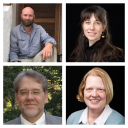
4 CAS faculty receive research, mentorship awards from the Cratis D. Williams School of Graduate Studies
Apr 13, 2023
BOONE, N.C. — Appalachian State University's Cratis D. Williams School of Graduate Studies has announced the recipients of their 2022-23 faculty awa...

SAFE Student Spotlight: Madeline Wight
Apr 11, 2023
Madeline Wight, M.S. BiologyStudent and Faculty Excellence (SAFE) Fund Recipient: Spring 2022Project: “Caloric Restriction and Its Effect on the Mic...
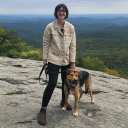
SAFE Student Spotlight: Annie Sylvester
Mar 28, 2023
Annie Sylvester, B.S. Physics (Secondary Education)Student and Faculty Excellence (SAFE) Fund Recipient: Spring 2022Project: “Automated Tracking Sol...

Dr. Cathy Marcum appointed editor of criminal justice journal
Mar 27, 2023
BOONE, N.C. — Dr. Cathy Marcum, department chair and professor in the Appalachian State University Department of Government and Justice Studies, has...

SAFE Faculty Spotlight: Trevor McKenzie
Mar 21, 2023
Trevor McKenzie, Director, Center for Appalachian StudiesStudent and Faculty Excellence (SAFE) Fund Recipient: Spring 2022Project: “Visits with Regi...
Physics, English major Olivia Adams selected for prestigious internship in Switzerland
Mar 8, 2023
BOONE, N.C. — Olivia Adams, a senior applied physics and English major from Raleigh, has been selected for the University of Michigan - CERN Summer ...