
BOONE, N.C. — Appalachian State University's Pathways to Resilience Quality Enhancement Plan (QEP) hosted its End-of-Year Awards and Celebration on Friday, May 1, 2026. The event brought together students, faculty, staff, and campus leadership to recognize shared progress toward the university's climate literacy goals and to honor members of the campus community who are advancing climate learning and action.
QEP Associate Director Laura England highlighted this year's achievements, writing, "Our campus community made tremendous progress on climate literacy work this academic year, including launching the Sustainability and Climate Literacy requirement in General Education, offering more than 150 sections of Climate Studies courses, establishing a new Climate Studies minor, and attracting thousands of participants to co-curricular climate learning events."
During the celebration, the QEP presented the inaugural Resilience Pathmaker Awards. The awards recognize students, faculty and staff who have made significant contributions to advancing climate literacy and what the QEP calls "climate response‑ability" — defined as "having the knowledge, skills, and sense of efficacy to envision and implement positive climate action in our professions and our communities."
A total of eight campus community members were honored, and among the awardees were two faculty members from the College of Arts and Sciences (CAS):
Carla Ramsdell
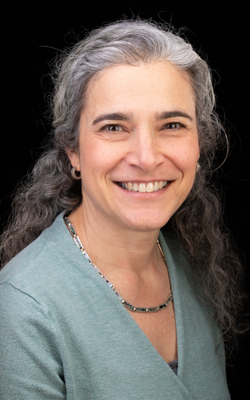 Carla Ramsdell, practitioner‑in‑residence in the Department of Physics and Astronomy and sustainability liaison for CAS, has advanced climate literacy at App State for the past 16 years. In the classroom, she focuses on providing General Education students with clear climate literacy that gives them the confidence to become change-makers and conversation-starters about climate action. Her teaching emphasizes helping students identify "the way in which their passions and skills will be best utilized for their unique climate‑focused work."
Ramsdell is known for designing approachable, fun, and community‑centered climate learning experiences. A recent example is her "super sizing" of a Cooking with Purpose program session into the Earth Month Cook‑In — Planet on a Plate, a hands‑on Zoom cooking class that invites participants to "engage in joyful climate solutions in their kitchens." Partnering with James Beard–nominated restaurateur Tina Houston, she develops "next‑level delicious recipes" that weave sustainable techniques into every step, helping participants connect everyday cooking practices with climate solutions.
Ramsdell also serves as a co‑facilitator of App State's Climate Wayfinding Program alongside England and Heidi Campbell. She describes the program as unique, explaining that "it allows students to weed through all the possible options of climate action to focus on how their skills and passion can be directed and most effective. It also allows like-minded climate superheroes to connect and encourage each other."
Her innovation extends into emergency preparedness and public education. With support from the QEP, Ramsdell is developing The Resilient Kitchen, a series of science‑backed videos designed to help households prepare for climate‑related emergencies such as Hurricane Helene. The project aims to help people equip their homes with basic supplies well before an emergency and then prioritize their to-do list in the days before a storm.
Ramsdell's leadership is deeply rooted in collaboration. She has served as director of the Appalachian Food Research for Equity, Sustainability and Health (AppalFRESH) Collaborative for more than a decade, helping coordinate the annual Community Food Engagement and Story Telling (FEaST) event. As the main point person for the Cooking with Purpose program for five years, Ramsdell has worked closely with the Office of Sustainability and Energy Management and CAS to "keep the program moving and improving," including onboarding new student ambassadors and partnering with faculty and staff from across the university. She also directs the Sustainable, Physics-Inspired Culinary Education (SPICE) Lab in the Department of Physics and Astronomy, where she is "excited to work with some incredible people to improve the pedagogy and outreach work done in this space."
Ramsdell described her impact, writing, "I believe that I bring some unique perspectives to my activities. I hope that these perspectives, blended with those of other amazing faculty across the campus will help ALL students find their place as change-makers in our efforts to mitigate climate change." She emphasizes that "no action is too small and that we are not too late to take action," noting that early steps can be "empowering and lead to more, larger, and more impactful steps." Above all, she hopes her work leaves others "more relaxed and joyful than when they started."
Marta Toran
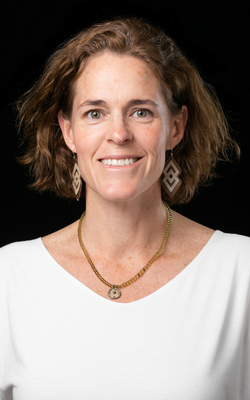 Marta Toran, senior lecturer and outreach coordinator in the Department of Geological and Environmental Sciences (GES), has advanced climate literacy at App State for more than a decade. Her work blends teaching, interdisciplinary collaboration, and community engagement, all grounded in her commitment to helping students understand climate change as both a scientific and deeply human issue.
Toran's climate literacy efforts began with her First-Year Seminar course, Science and the Public, in which she used climate change as a lens to explore science communication and public understanding of complex topics. Since then, she has taught climate‑centered courses every semester, continually expanding opportunities for students to engage with climate issues at local, national, and global scales. Her classes regularly feature guest speakers whom she brings in through relationship‑building and persistence rather than a budget for honoraria. These voices help students connect scientific concepts with lived experiences, from regional extreme weather events to Indigenous perspectives on environmental justice to the rapidly changing polar environments.
Toran is known for designing learning experiences that help students see climate change as real, personal, and interconnected. She created a pen‑pal exchange with a school in Nigeria, enabling students to share letters and videos about local climate impacts. She also brings her classes to climate‑focused exhibitions at the Turchin Center for the Visual Arts, where students analyze how visual media communicates climate issues and respond through discussion, reflection, and creative work. She trains students and faculty on tools such as En‑ROADS, EJScreen, and data visualization platforms, and regularly involves her students in outreach with K–12 learners, including professional development for teachers. Several of her mentees in the NC Environmental Education program have become En‑ROADS Ambassadors and active contributors to climate initiatives.
Her leadership is rooted in bridge‑building across disciplines. Toran describes her approach as integrating "visual media, art, and personal expression as entry points for engagement, while keeping scientific understanding as the foundation." As a Climate Change Fellow, she helped develop and refine the Climate Response and Response‑Ability course, piloting strategies that now reach hundreds of students. She brought these approaches into the GES department, building support for cross‑campus climate strategies and helping launch a new climate‑centered conservation course that blends science with storytelling and engagement. Her doctoral research extends this work, examining how arts‑based approaches support climate communication and help students connect with the issue more personally.
Toran's impact is visible in both student learning and student action. She has taught 10 sections of the Climate Response course — reaching approximately 240 students — and more than 25 climate‑centered course sections overall, impacting around 600 first‑year students. Her new General Education course, Conservation in a Changing Climate, enrolled 100 students in its first semester. Toran shared that many of her students have gone on to volunteer with Watauga Riverkeeper, work in the Office of Sustainability, join climate‑focused student groups, or shift their academic and career paths toward environmental fields.
Her outreach extends far beyond campus. Toran has developed climate‑focused programming for local libraries, presented at regional and national conferences, and created free online resources for educators. As Co‑PI on a climate‑focused hydrology project examining changes to the Arctic water cycle, she has facilitated multi‑year outreach efforts in Alaska, including designing climate activities for the Alaska Native Science and Engineering Program Middle School Academy and training a Native Alaskan undergraduate student to lead sessions. She also collaborated with local teachers to pilot these materials, expanding their reach.
Currently, Toran serves as PI on an EPA Environmental Education grant that uses virtual reality to help middle and high school students in North Carolina and Alaska explore climate impacts and build empathy for affected communities. Through these efforts, Toan helps students understand not only the science of climate change but also their own capacity to respond.
###
About the Department of Geological and Environmental Sciences
Located in Western North Carolina, Appalachian State University provides the perfect setting to study geological and environmental sciences. The Department of Geological and Environmental Sciences provides students with a solid foundation on which to prepare for graduate school or build successful careers as scientists, consultants and secondary education teachers. The department offers six degree options in geology and two degree options in environmental science. Learn more at earth.appstate.edu.
About the Department of Physics and Astronomy
The Department of Physics and Astronomy’s curriculum has an applied nature that includes a core of fundamental physics courses and laboratory experiences. The department prepares graduates for a variety of scientific, teaching or engineering professions, as well as future educational endeavors. Learn more at physics.appstate.edu.
By Lauren Gibbs
May 20, 2026
BOONE, N.C.
Pathways to Resilience Quality Enhancement Plan logo
Pathways to Resilience Quality Enhancement Plan=