Mountaineer Discovery: This story is part of a series highlighting student research, creativity, and innovation at App State. Join the Office of Student Research for the 29th annual Celebration of Student Research and Creative Endeavors on Wednesday, April 22.
Modern chemistry meets food preparation practices that date to antiquity in a protein processing lab at App State. Student researchers Jackson Johnson and Jack Kelly, both seniors in the Department of Chemistry and Fermentation Sciences, are combining the power of fermentation with chemical analysis to create a next-generation protein from common industrial food waste.
“The human population is growing at a rapid clip, putting stress on our food systems to produce quality, nutritious, and affordable food,” said Johnson, of Hickory. “Our research attempts to solve this problem by investigating alternative protein sources — which are potentially everything from edible biofilms to plants and fungal products.”
Johnson’s research subjects sunflower seed meal to microbial fermentation to improve its sensory properties and bring additional dietary and health benefits, he explained. Once the foundational processes of fermenting your way from waste to nutrition are examined in the lab, validated, and scaled up, the research could be applied to a wide range of materials that would otherwise be bound for the trash or compost heap, he said.
“Millions of tons of this sunflower seed meal waste are produced per year, since sunflower is one of the most popular cooking oils,” Johnson said. “Most of this meal is used as animal feed, but it has great nutritional properties.”
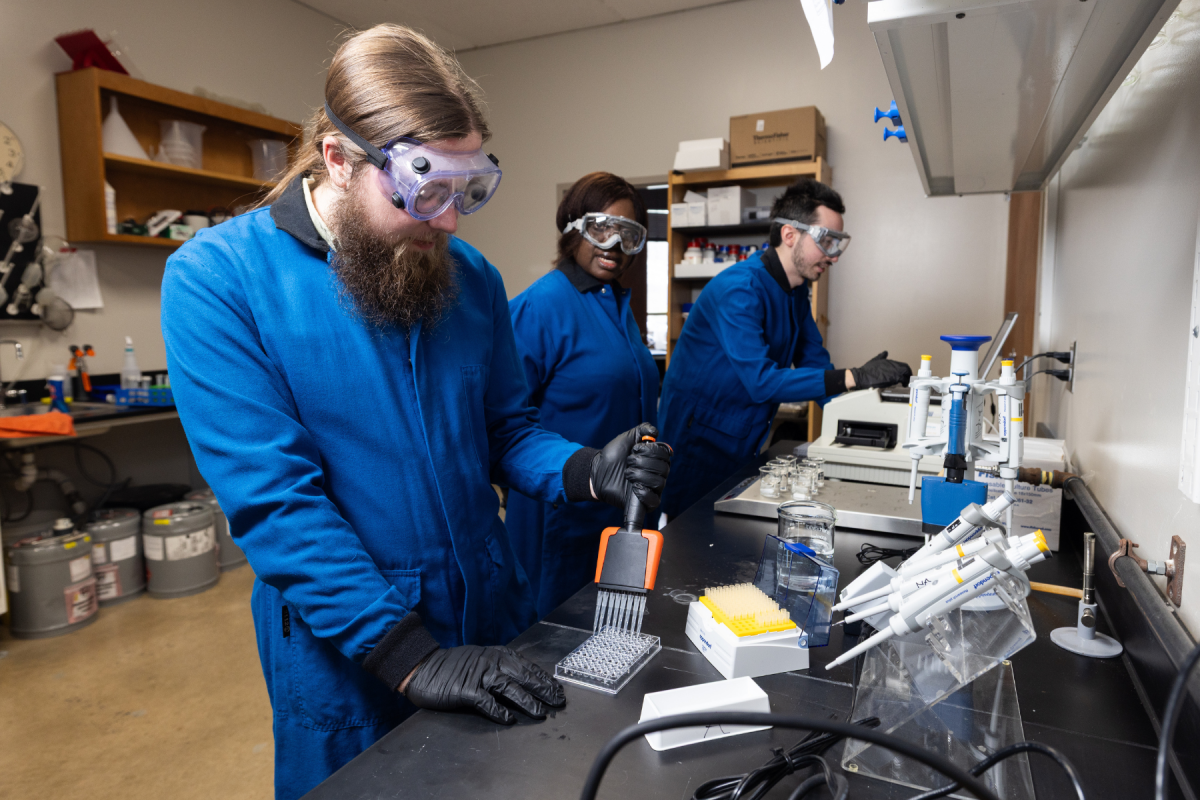
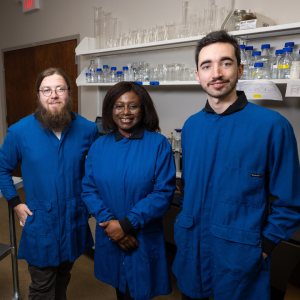
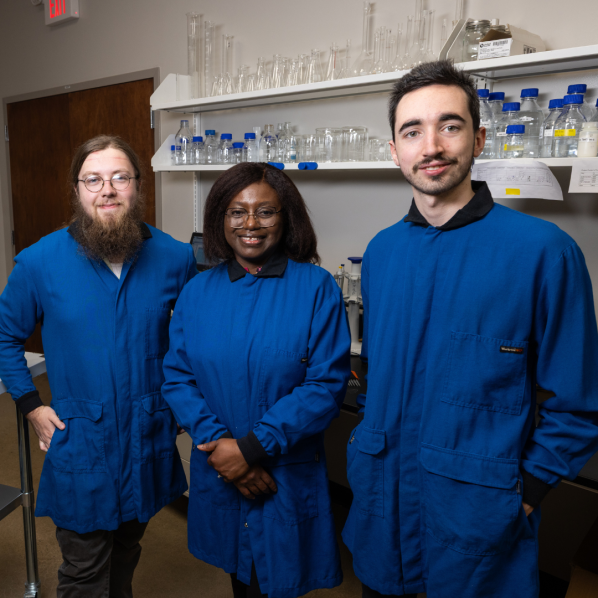
From left, Jackson Johnson, Dr. Nancy Asen, and Jack Kelly work in the lab. Photo by Chase Reynolds
The valorization research is guided by faculty mentor Dr. Nancy Asen, assistant professor in the Department of Chemistry and Fermentation Sciences. Valorization is the process of converting waste into economically viable products that, in this case, can help power a circular bioeconomy.
Johnson puts the samples through a battery of tests that analyze emulsification, gelation, foam generation, water and oil retention, and other properties, and how these properties change during fermentation.
“To really understand what is happening in the product, we need more information about the proteins,” he said. “For example, foaming capacity is important for making a light mouthfeel for foods like whipped cream and cake. If there are more proteins, or proteins that bind to each other strongly, then the foam will be more stable and last longer.”
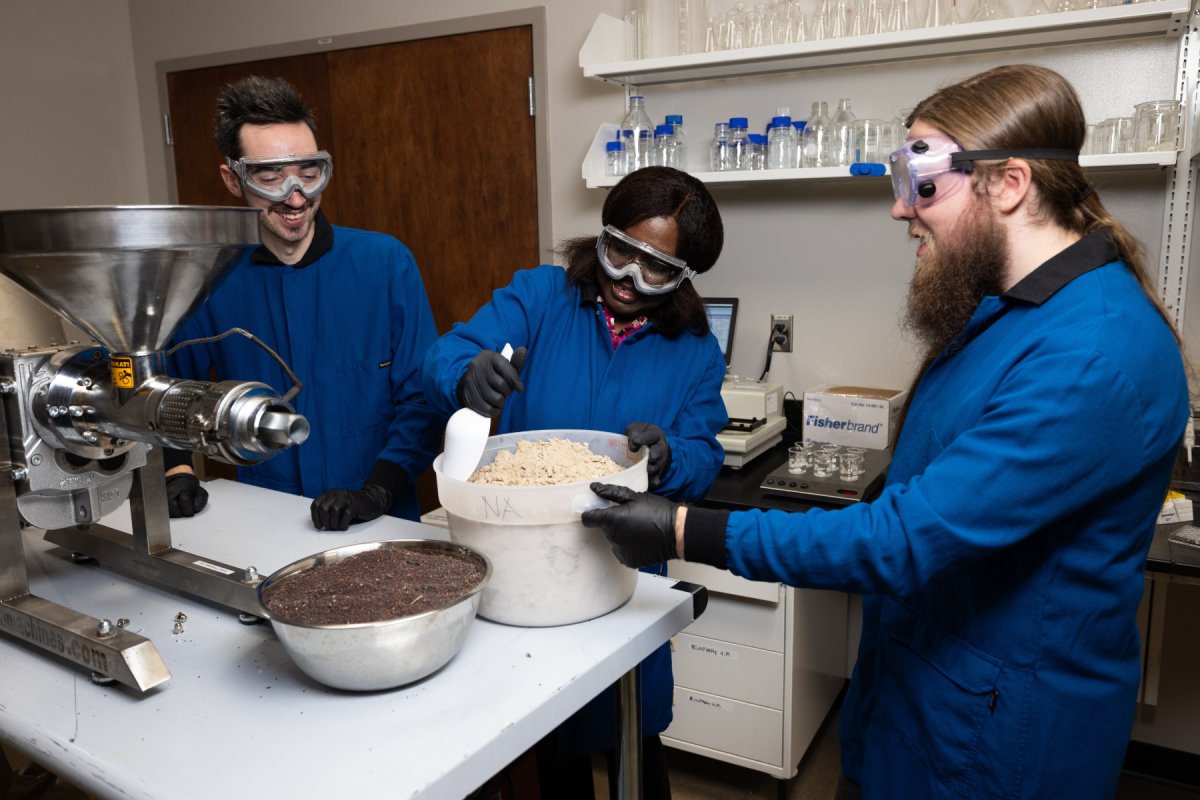
App State student researchers Jack Kelly, left, and Jackson Johnson, right, prepare oil seed waste for analysis in a project led by Dr. Nancy Asen, center, using fermentation to turn waste to food. Photo by Chase Reynolds
Kelly, of Rolesville, prepares canola seed meal samples by removing the oil, then enhances the meal waste using fermentation technology. Similar to Johnson’s work, the next step is a range of tests to determine the physicochemical and functional properties of the proteins and what happens to them during fermentation.
He remembers having the thought as a kid that maybe, one day, being vegan could be economical.
“The goal is to make my results clear and concise, so a big company can take my data, upscale, and sell a more renewable food product,” he said. “I hope this research can fuel a new era of cost-effective foods across the globe.”
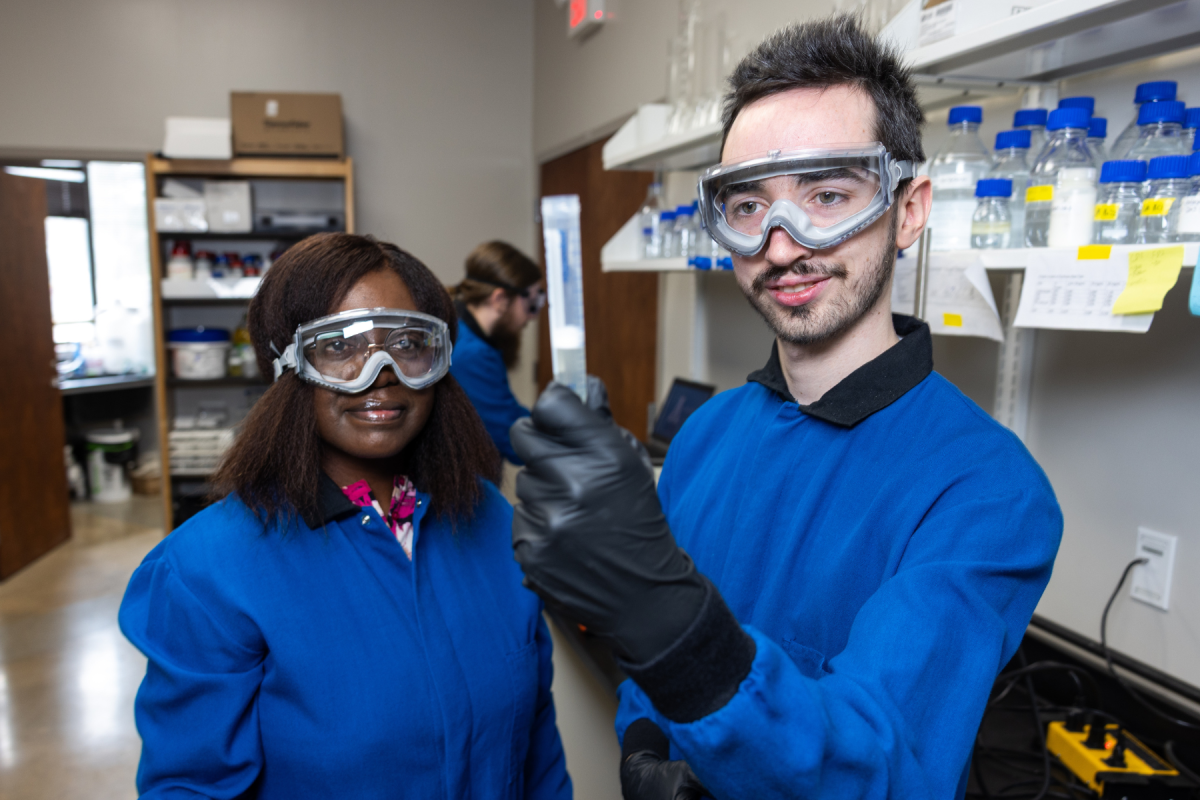
Dr. Nancy Asen and App State senior Jack Kelly examine a sample in the lab to understand foundational properties of oil seed waste and its potential to yield new edible protein sources through fermentation. Photo by Chase Reynolds
###
About the A.R. Smith Department of Chemistry and Fermentation Sciences
The A.R. Smith Department of Chemistry and Fermentation Sciences offers a Bachelor of Arts in chemistry, a Bachelor of Science in chemistry with eight different concentrations and an interdisciplinary Bachelor of Science degree in fermentation sciences. The department’s programs prepare students to attend graduate and professional schools, as well as for employment in the pharmaceutical and fermentation industries and other business sectors. Learn more at dcfs.appstate.edu.
About the College of Arts and Sciences
The College of Arts and Sciences (CAS) at Appalachian State University is home to 17 academic departments, two centers and one residential college. These units span the humanities and the social, mathematical and natural sciences. CAS aims to develop a distinctive identity built upon our university's strengths, traditions and locations. The college’s values lie not only in service to the university and local community, but through inspiring, training, educating and sustaining the development of its students as global citizens. More than 6,800 student majors are enrolled in the college. As the college is also largely responsible for implementing App State’s general education curriculum, it is heavily involved in the education of all students at the university, including those pursuing majors in other colleges. Learn more at cas.appstate.edu.
By Bret Yager
April 8, 2026
BOONE, N.C.
Three individuals wearing blue jackets in a scientific lab.
From left, Jackson Johnson, Dr. Nancy Asen, and Jack Kelly in the lab. Photo by Chase Reynolds