
BOONE, N.C. — Appalachian State University's Cratis D. Williams School of Graduate Studies has announced the recipients of their 2025–26 awards. The recipients were honored at the Williams School of Graduate Studies Faculty and Student Awards Ceremony on Tuesday, April 7, 2026.
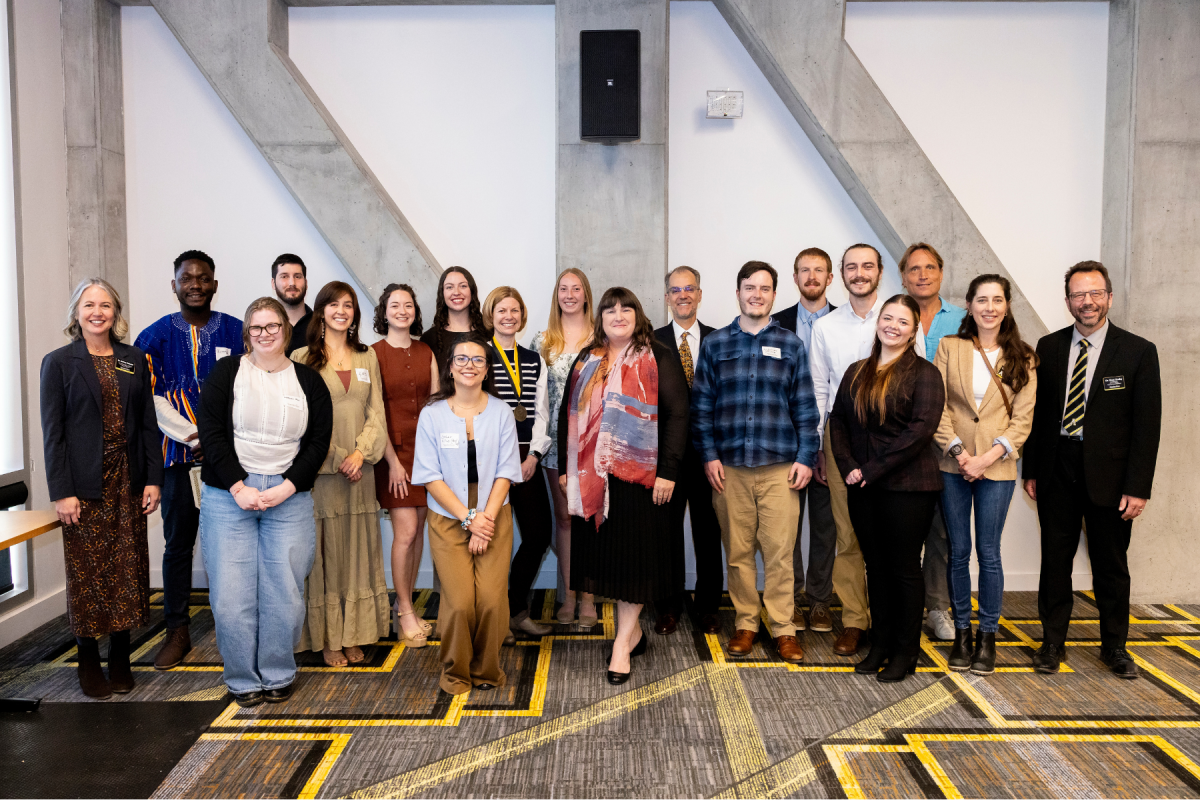
Cratis D. Williams School of Graduate Studies Dean Ashley Colquitt, far left, and Associate Dean Ross Gosky, far right, stand with 2025–26 award recipients at the Faculty and Student Awards Ceremony on Tuesday, April 7, 2026. (Photo by Kyla Willoughby)
100 Scholars Award
The 100 Scholars Research Award is designed to recognize exemplary research or creative activities of a tenured faculty member. The recipient will be a senior faculty member performing well above the standard level of faculty research within the last five years.
Dr. James Sherman, professor in the Department of Physics and Astronomy, received the 100 Scholars Award.
A nominator wrote about Sherman, “He is a senior faculty member who consistently performs well above the standard level of research, particularly in the critical areas of climate science and atmospheric physics.” Noting several significant external funding awards, the nominator said, “These awards aren't just about the dollar amounts; they represent James’s standing in the field and his ability to bring cutting-edge instrumentation to App State.” Finally, they noted, “What makes James’s research even more impactful is how he integrates it into the university’s mission. His work falls squarely into the targeted area of environmental research, and he has built a pipeline that involves our students in every step of the process.”
Sherman discussed the importance of his research: “Climate change is one of the most challenging problems that society is facing this century and the effects of atmospheric aerosols (haze, smoke, dust) on earth’s climate are the largest uncertainties in climate forcing. Our NOAA and NASA Aerosol Network sites at App State are home to one of the two largest suites of long-term aerosol measurements (16 years to date) in the continental U.S. We are the only comparable site relying nearly exclusively on masters and undergraduate students for instrument and data support, which provides climate science research training opportunities that are not possible at other universities.”
Dr. Maggie Sugg, associate professor and honors director in the Department of Geography and Planning, received the 100 Scholars Award.
A nominator wrote about Sugg, “Her scientific inquiry employs emerging methodologies that integrate the disciplines of GIScience, medical geography, climatology, and epidemiology. Her innovative research has garnered attention not only within the field of geography but also across interdisciplinary boundaries of medicine, climatology, and public health. As an example, Dr. Sugg has been an invited participant in panels for the National Academies of Science, Engineering, and Medicine and the Howard Hughes Institute.”
Sugg explained why her research area is important to her: “I have spent my career in Appalachia, so the communities I study are communities I care about. When I watch a region like Western North Carolina get hit by a hurricane and then spend years piecing itself back together, the question of who recovers and who doesn't feels urgent and personal. Climate change is a health equity issue, and I want my research to be useful to the people living inside that reality.”
Academy of Outstanding Mentors
The Academy of Outstanding Graduate Mentors was established to recognize graduate faculty members for exemplary mentoring activities well beyond good classroom and laboratory instruction or research supervision of graduate students.
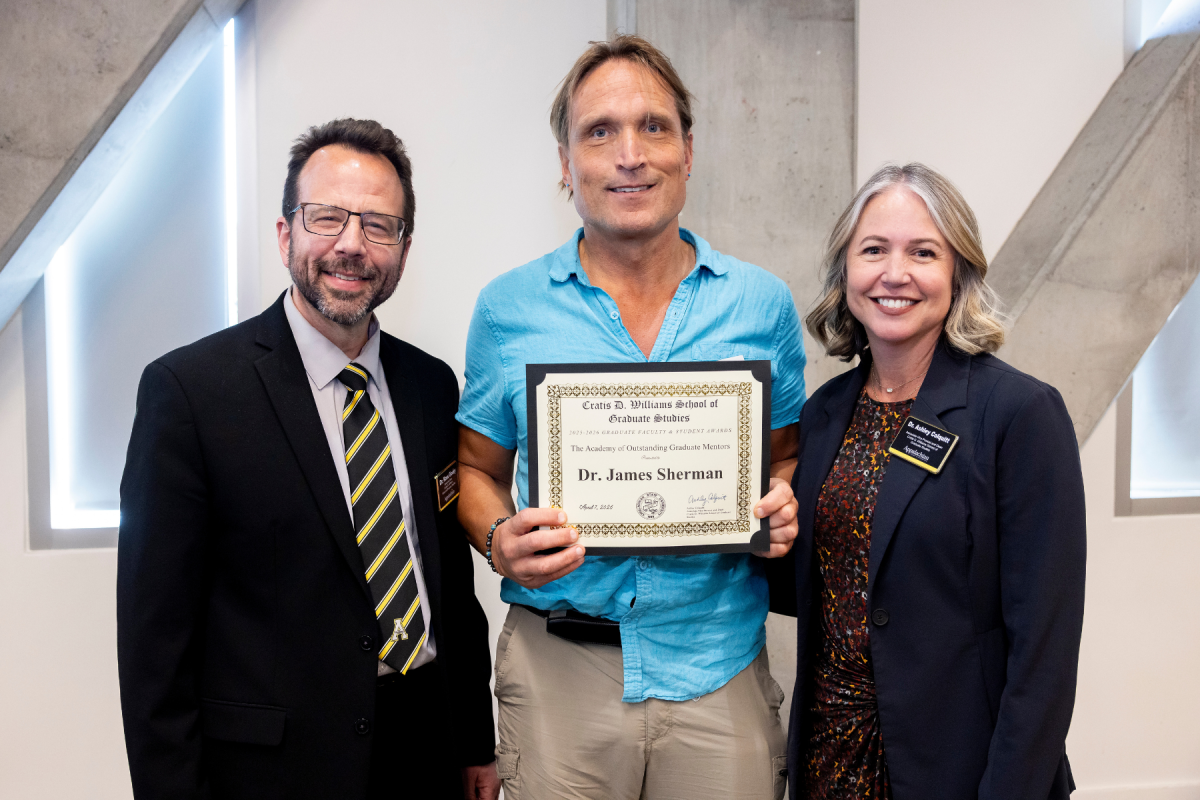
Department of Physics and Astronomy professor James Sherman, center, is presented with the 100 Scholars Award and inducted into the Academy of Outstanding Mentors during the Cratis D. Williams School of Graduate Studies Faculty and Student Awards Ceremony on Tuesday, April 7, 2026. (Photo by Kyla Willoughby)
In addition to receiving the 100 Scholars Award, Dr. James Sherman was inducted into the Academy of Outstanding Mentors.
A colleague wrote about Sherman: “I am particularly impressed by how Jim prepares his students for the professional scientific community. He ensures they participate in every phase of the STEM process, from instrumentation to publication. His students have presented at the world’s leading conferences, including the American Geophysical Union and the European Aerosol Conference. It is a testament to his mentorship that his former students are now thriving in careers at the NOAA, Campbell Scientific, and other major atmospheric organizations.”
Sherman shared that the most enjoyable part of his job is working with his research students, especially the individual interactions and developing relationships. He enjoys staying in contact with students after they graduate and following their careers.
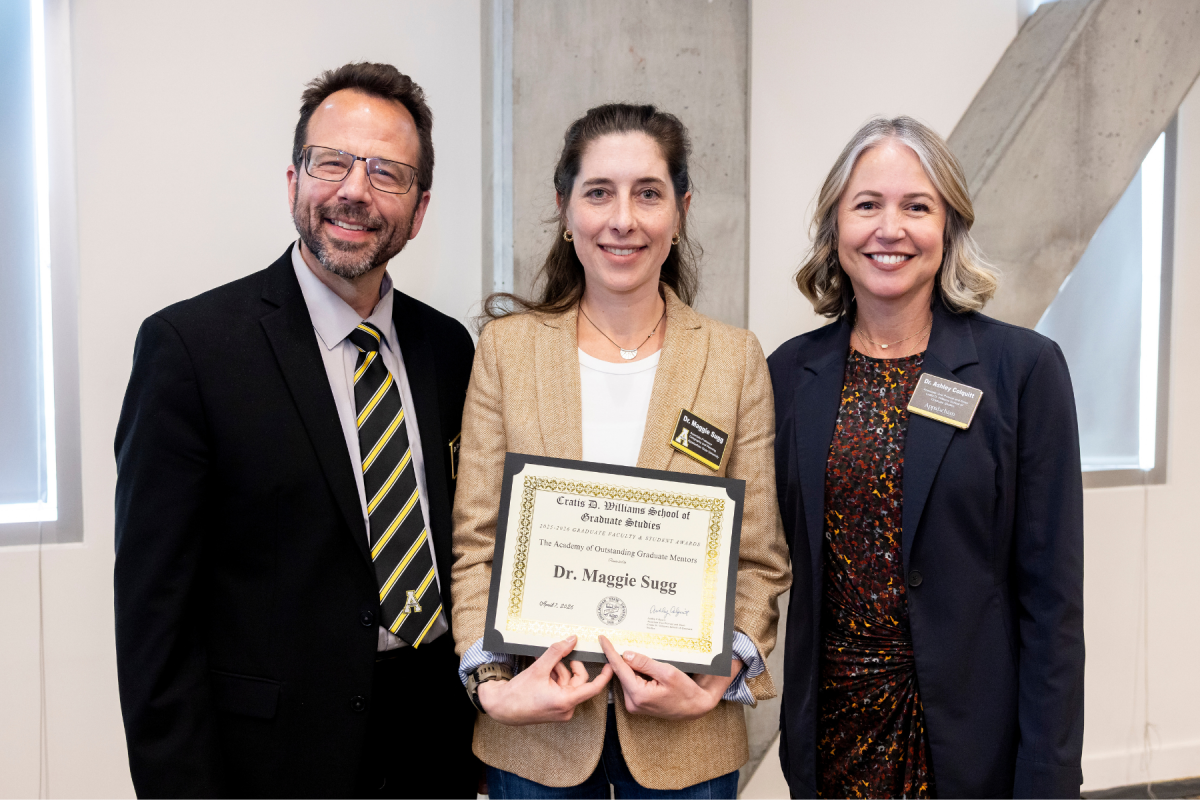
Department of Geography and Planning associate professor Maggie Sugg, center, is presented the 100 Scholars Award and inducted into the Academy of Outstanding Mentors during the Cratis D. Williams School of Graduate Studies Faculty and Student Awards Ceremony on Tuesday, April 7, 2026. (Photo by Kyla Willoughby)
In addition to receiving the 100 Scholars Award, Dr. Maggie Sugg was inducted into the Academy of Outstanding Mentors.
A former student wrote about Sugg, “Dr. Sugg’s mentorship fundamentally changed the trajectory of my academic and professional life. I entered Appalachian State University as a new graduate student with absolutely no prior research experience. Dr. Sugg’s rigorous and deeply invested mentorship pushed me to develop the skills, confidence, and scholarly identity necessary for my acceptance into the Ph.D. program in Geography at the University of North Carolina at Chapel Hill.”
When asked what she finds most enjoyable about her job, Sugg replied, “My lab is a large, collaborative team where everyone, graduate students and undergraduates, trains and learns alongside each other. There is something powerful about that collective environment: students arrive unsure whether they belong in research, and the group pulls them in. About 63% of my published work has been co-authored with students because that is simply how we work. The learning and the research happen in the same motion.”
Domer Research Award
The Domer Research Award was established by Dr. Judith Domer, dean of the Graduate School from 1997–2004, and her husband Floyd to provide assistance for expenses related to scholarly activities.
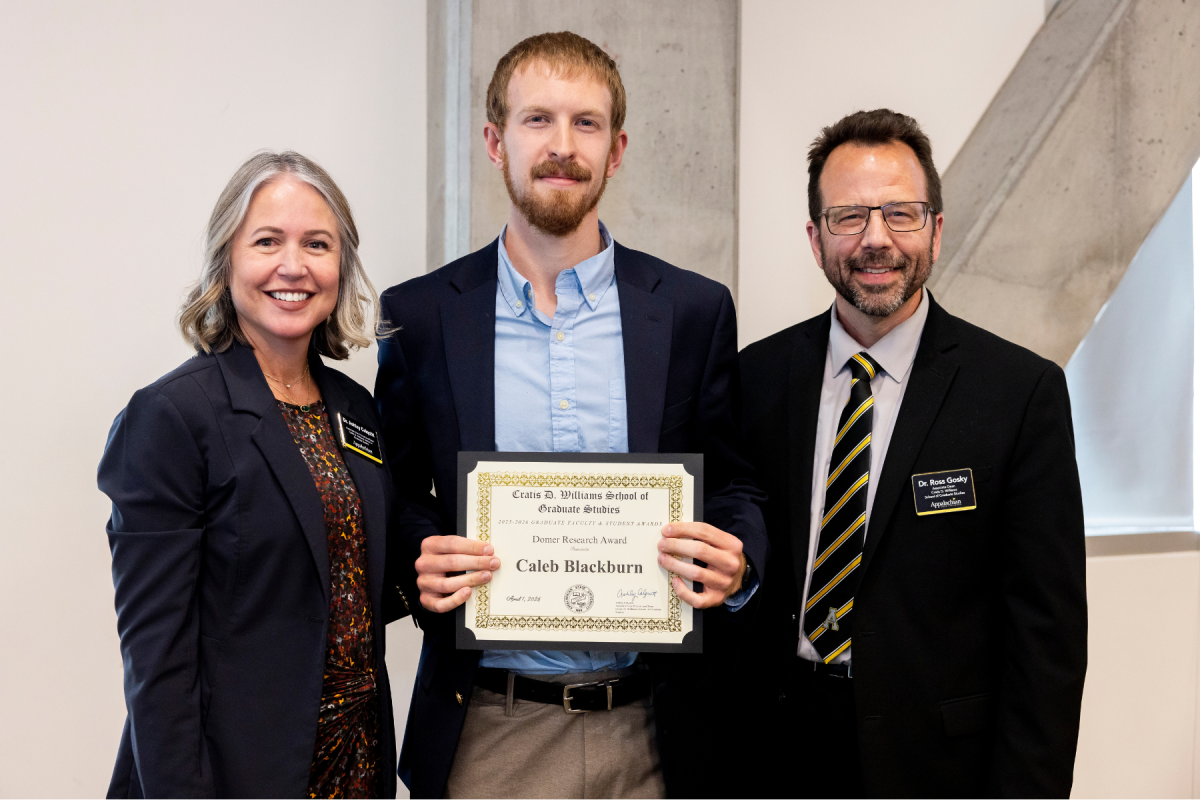
Geography graduate student Caleb Blackburn ’21, center, receives the Domer Research Award at the Cratis D. Williams School of Graduate Studies Faculty and Student Awards Ceremony on Tuesday, April 7, 2026. (Photo by Kyla Willoughby)
Caleb Blackburn ’21, graduate student in the geography program, received the award for his research project, “Mental Health Impacts of Compounding Climate Events in the Southeastern United States: A Difference-in-Differences Analysis.” Blackburn's research is advised by Dr. Maggie Sugg.
Blackburn's nominator described him as “among the most driven, capable, and self-directed students I have mentored.” His thesis was described by a nominator as a “timely and critically important topic, particularly for the southeastern United States where the probability of compounding climate events far exceeds other regions, and where access to mental health resources is relatively limited. His research employs an innovative geospatial analytical framework that combines novel digital mental health data, advanced causal inference methodologies, and comprehensive demographic analysis.” Blackburn's recommenders all agreed that he shows an extremely promising research career ahead.
When asked about the most enjoyable part of his graduate experience, Blackburn responded, “Working with Dr. Maggie Sugg has allowed me to grow and reach academic levels I could have never imagined, so that has been the most enjoyable part.” He plans to continue research with Sugg next year, while teaching a geography health class
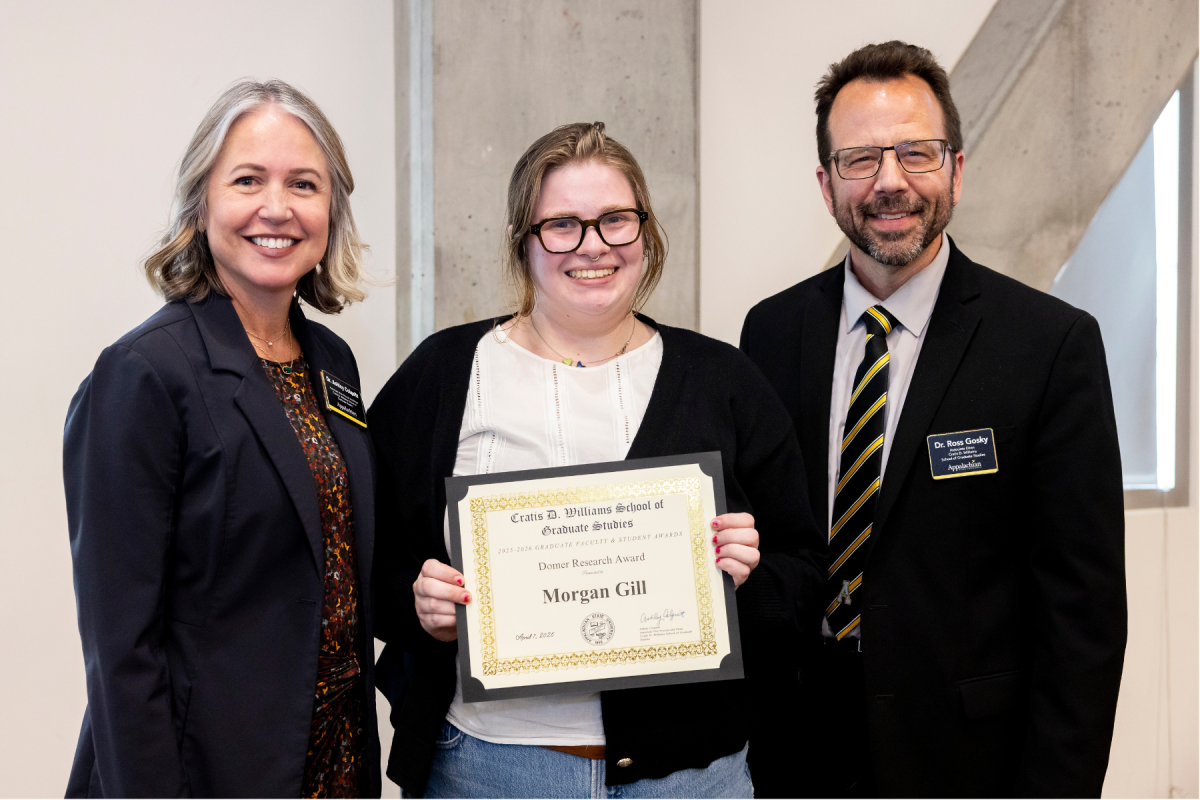
Biology graduate student Morgan Gill ’24, center, receives the Domer Research Award at the Cratis D. Williams School of Graduate Studies Faculty and Student Awards Ceremony on Tuesday, April 7, 2026. (Photo by Kyla Willoughby)
Morgan Gill ’24, graduate student in the biology program, received the award for her research project, “Persisting Impacts of Compost Amendments on Microbial Diversity and Functions in Rangeland Soils.” Gill's research is advised by Dr. Ashley Adams, assistant professor in the Department of Biology.
Gill’s mentor stated that she “exemplifies scholarly excellence, intellectual creativity, and initiative.” The nominator described Gill's research as exhibiting a “level of conceptual and technical sophistication that is unusual at the master’s level and speaks to the originality and strength of her research vision.”
The Domer Award will support Gill's oral presentation at the Global Soil Biodiversity Conference Victoria, British Columbia, Canada. Gill shared, “The opportunity to discuss my current and future research at this venue would be a pivotal career step, as I plan to continue my research in soil metagenomes for my PhD work and beyond.”
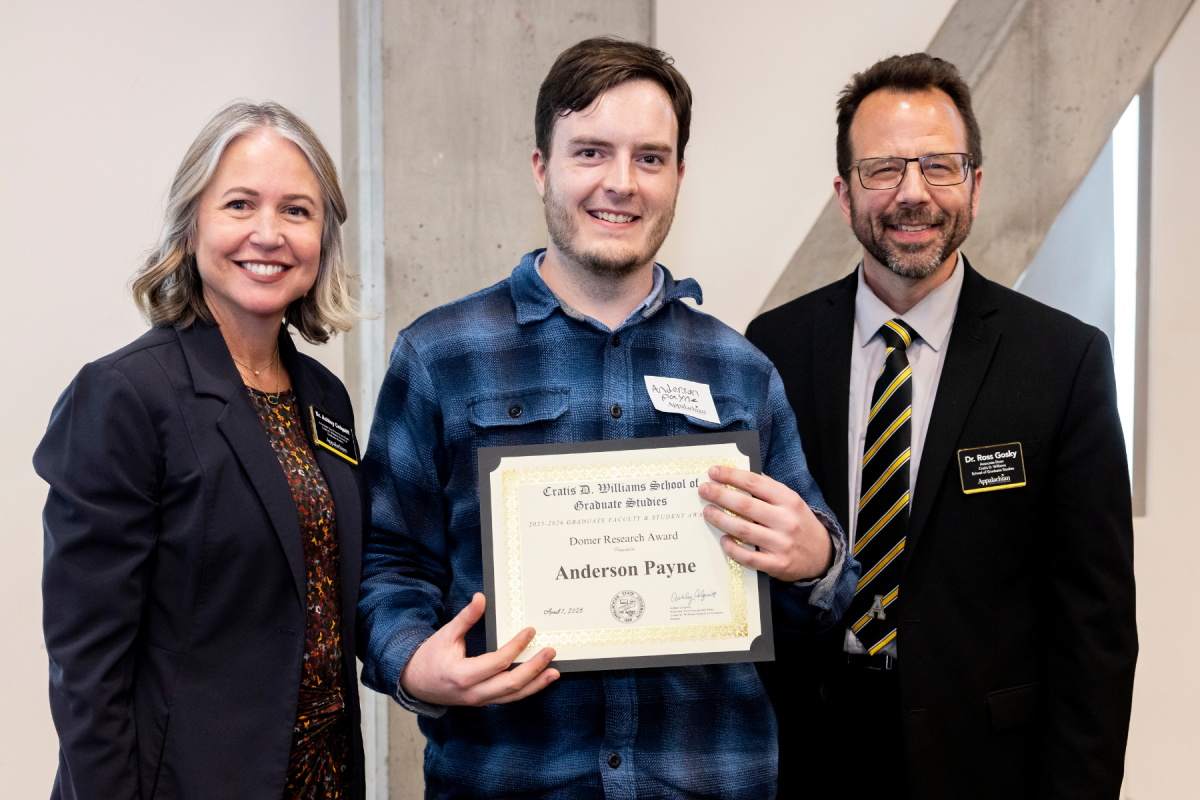
Biology graduate student Anderson Payne, center, receives the Domer Research Award at the Cratis D. Williams School of Graduate Studies Faculty and Student Awards Ceremony on Tuesday, April 7, 2026. (Photo by Kyla Willoughby)
Anderson Payne, graduate student in the biology program, received the award for his research project, “Effects of Biochar Amendments on Nematode Community Structure.” Payne's research is advised by Dr. Ashley Adams.
A nominator remarked about Payne, “I am continually impressed by his dedication, enthusiasm, and deep intellectual curiosity.” They added, “Anderson has demonstrated initiative and passion for his work. His hypotheses are well developed, reflecting his ability to synthesize complex ideas in soil health and ecology.”
Payne is looking to gain more experience presenting research in formal settings and network with a broader range of scientists when he attends the Association of Southeastern Biologists Annual Meeting. He hopes these connections will help during his PhD by identifying potential future collaborators.
Outstanding Graduate Teaching Assistant Award
The Outstanding Graduate Teaching Assistant Award was established to recognize graduate students in graduate teaching assistantships who excel as instructors in undergraduate classes.
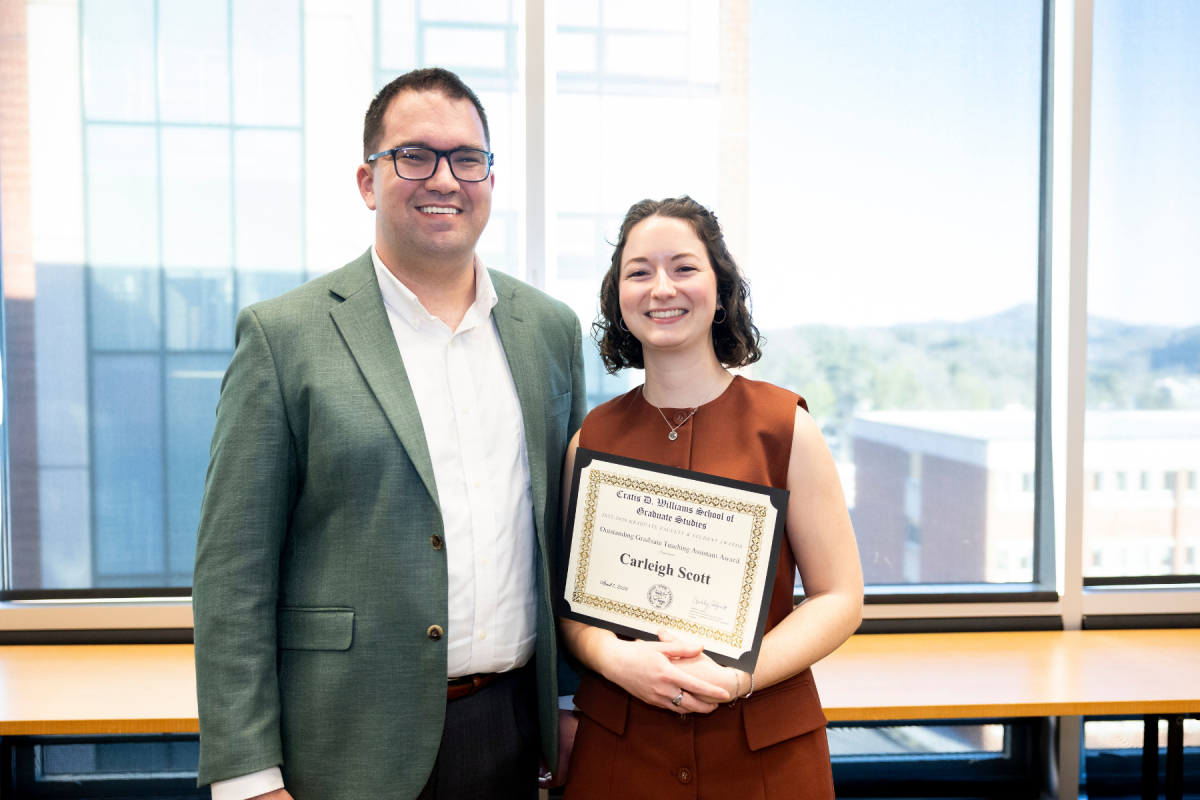
Dr. Quinn Morris, left, associate professor and graduate program director in the Department of Mathematical Sciences, celebrates with Carleigh Scott ’22, right, recipient of the Outstanding Graduate Teaching Assistant Award, at the Cratis D. Williams School of Graduate Studies Faculty and Student Awards Ceremony on Tuesday, April 7, 2026. (Photo by Kyla Willoughby)
Carleigh Scott ’22, graduate student in the mathematics program, received the award for her exceptional instruction of the College Algebra and Calculus for Business and Economics courses.
When describing Scott’s work as an instructor, her nominator shared that she “has demonstrated a level of dedication, intentionality, and pedagogical sophistication that is truly exceptional among graduate student instructors.” It was noted that: “Students in her courses, regardless of their preparation level or background, are treated as capable and worthwhile participants in the mathematical enterprise.” Another recommender highlighted that Scott is “continually looking to improve her craft and find better ways to support students and give them a voice in her classes.” Scott was described as “an exceptional instructor whose commitment to student learning, thoughtful pedagogy, and genuine care for her students distinguish her as one of the most effective graduate teaching assistants with whom I have had the privilege to work.”
When asked why her study area matters, Scott replied, “I study mathematics education because I want to make an impact in the classroom. So often, people tell me that they hated math class or that they really struggled, and I want to turn that experience around for students. I strive to help students learn mathematics through discussion and problem-solving activities where they are learning from mistakes and making connections across concepts.”
Outstanding Thesis Award
The Outstanding Thesis Award recognizes outstanding scholarly activity by students who have completed Master's theses in the previous calendar year. The recognition is awarded in three categories: 1) social science, business and education, 2) arts and humanities or 3) science and technology.
Caroline Fehlman ’23 ’25, alumna of the geography and mathematics graduate programs, received the award in the science and technology category for her thesis, titled "Maternal Healthcare Access Disparities in North Carolina, 2016-2019: A Fine-Scale Geospatial Analysis." Fehlman's research was advised by Dr. Maggie Sugg.
A nominator described Fehlman's thesis as “among the top 1% of theses that I have had the pleasure of reviewing during my 11 years at Appalachian.” Another recommender wrote, “Caroline consistently demonstrated intellectual curiosity, methodological rigor, and a commitment to research that addresses real-world health disparities.”
Fehlman's master's thesis was notable for its statewide scope, examining maternal healthcare access at the census tract level across all of North Carolina from 2011 to 2019. A nominator explained, “In addition to the critical importance of her topic, and novel application of state-of-the-art disciplinary methods, the thesis was beautifully composed and was a pleasure to read. Her thesis is currently under review for publication in the journal Births.”
Fehlman is currently a doctoral student at the University of North Carolina at Chapel Hill's Gillings School of Global Health studying epidemiology with research interests in women’s cancer epidemiology.
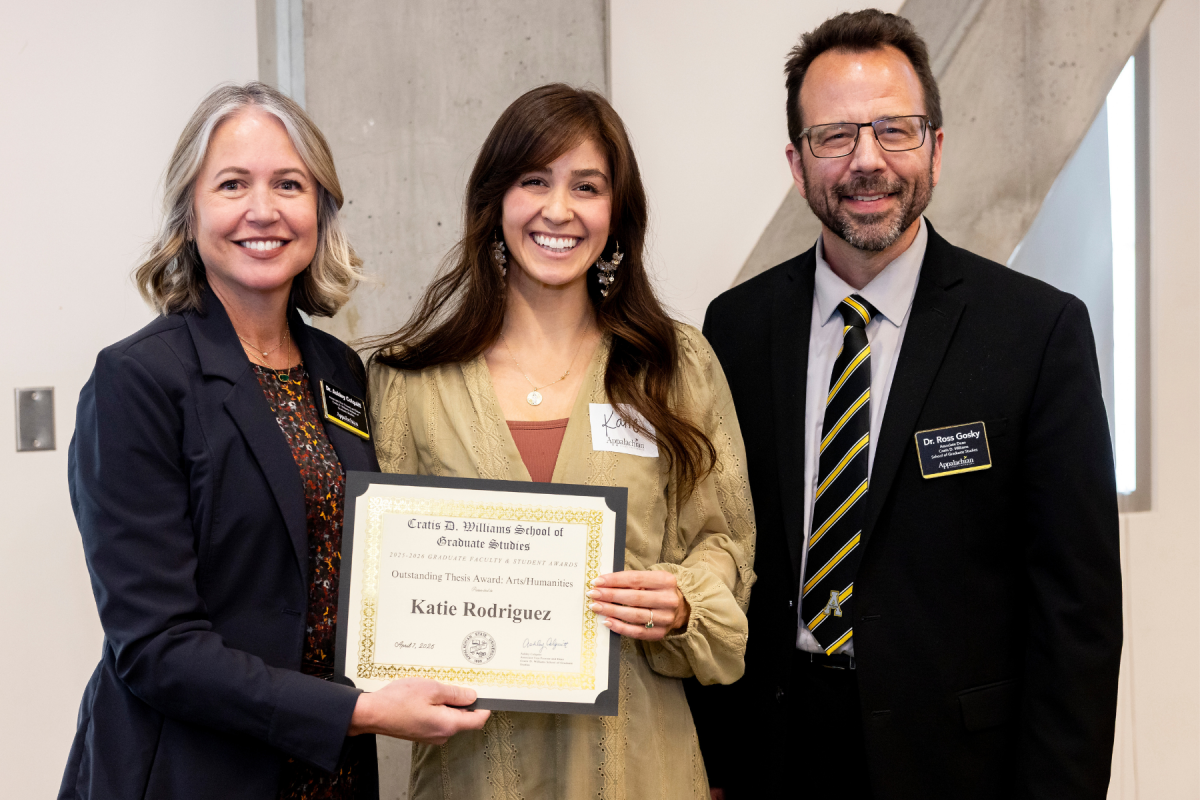
Appalachian studies alumna Katie Rodriguez ’25, center, receives the Outstanding Thesis Award in the arts and humanities category at the Cratis D. Williams School of Graduate Studies Faculty and Student Awards Ceremony on Tuesday, April 7, 2026. (Photo by Kyla Willoughby)
Katie Rodriguez ’25, alumna of the Appalachian Studies graduate program, received the award in the arts and humanities category for her thesis, titled “Beyond Boundaries: Reframing the Archaeology of the Native New River.” Rodriguez's research was advised by Dr. Alice Wright, associate professor in the Department of Anthropology.
Rodriguez’s nominator wrote, “Katie is only one of a couple scholars currently working to integrate Appalachian studies and anthropological archaeology. Katie’s thesis puts her at the cutting edge of this discourse.” Another recommender stated, “From my perspective as a scholar of Appalachian studies, Katie's work is incredibly important to the multi-disciplinary field, as it broadens the base of knowledge about Indigenous presence and settlement patterns in the region.”
In her thesis, Rodriguez calls attention to what is important to all of us living and working in Appalachia: “…this place we call home is beautiful, bountiful, and meaningful. All of this was also true for the Indigenous who knew this place as their home.” A nominator remarked, “In a disciplinary field that is focused on place-based meaning and knowledge, Katie's thesis takes this concept beyond the historical record, allowing the diverse populations that were in Appalachia long before European contact to finally have a voice.”
Wachovia Environmental Research Award
The Wachovia Award is designed to recognize faculty or graduate students actively engaged in high-quality environmental research related to the southern Appalachians.
Dr. Tatyana Ruseva, professor and interim assistant chair in the Department of Government and Justice Studies, received the award for her work studying recovery and resilience in rural Appalachian communities following Hurricane Helene.
Ruseva's chair wrote, “Her research has incredible practical utility for local environmental policy, and her work in the classroom inspires students to become involved in environmental politics...I can think of no person more qualified for this award than Dr. Ruseva. Her publications and grants speak for themselves. Even so, it is also worth including that Dr. Ruseva is incredibly hard-working; she is committed to good environmental governance; she is generous with her time, especially when it comes to students; and, she is kind.”
Ruseva shared that her great-grandfather was a forester in the Balkan Mountains and, while she never pictured herself as one, today she is studying and learning about forest ownership and management in the Appalachian Mountains. Through her research, she has learned that how humans interact with their natural surroundings and manage woodlands is less about place or policy, and more about values, perceptions, and family history and legacy.
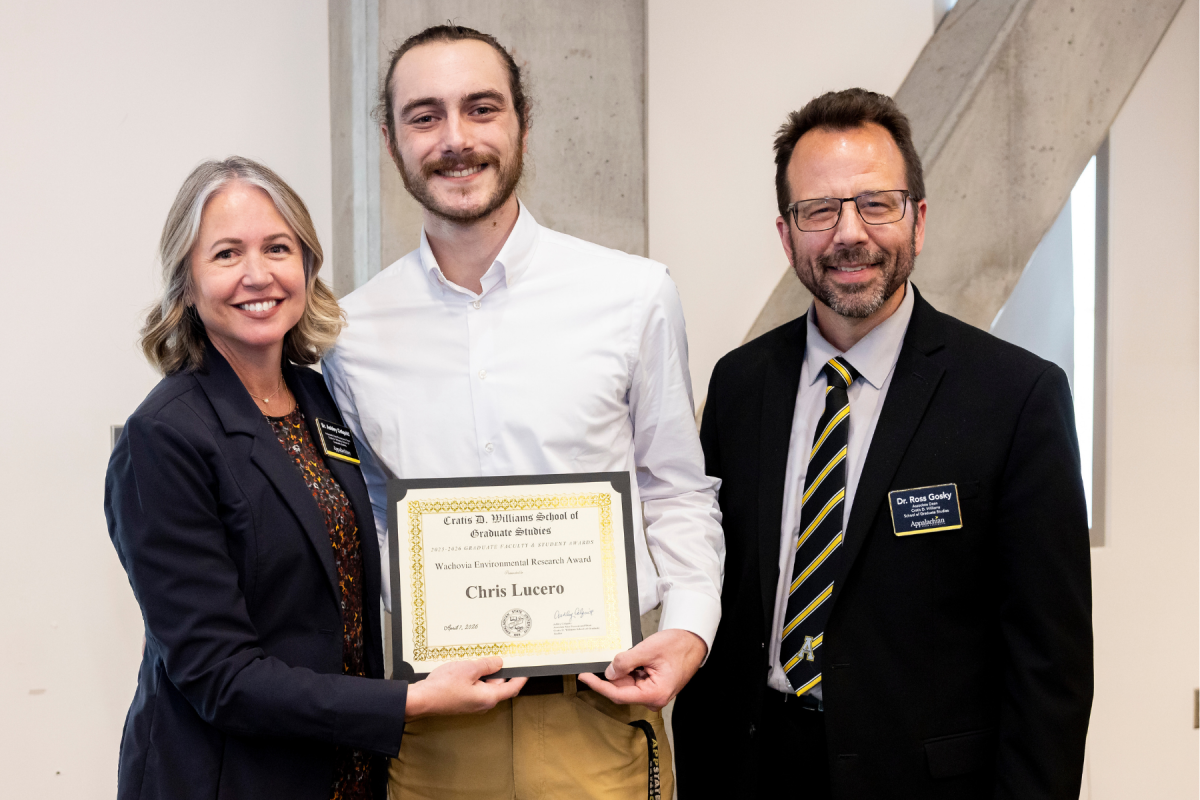
Geography graduate student Chris Lucero ’24, center, receives the Wachovia Environmental Research Award at the Cratis D. Williams School of Graduate Studies Faculty and Student Awards Ceremony on Tuesday, April 7, 2026. (Photo by Kyla Willoughby)
Chris Lucero ’24, graduate student in the geography program, received the award for his work studying the impacts of basin topography and land use on flood magnitudes from Hurricane Helene. Lucero's research was advised by Dr. Derek Martin, professor and graduate program director in the Department of Geography and Planning.
Martin shared, “Chris published his first manuscript as an undergraduate in 2024 while working as an undergraduate researcher with Dr. Maggie Sugg. This served as an early indicator of Chris’s strong abilities and future promise as a graduate student and researcher.”
Lucero's work explores the geographic variables that led to catastrophic flooding in Western North Carolina. “The project has involved months of rigorous fieldwork in which Chris identified high water indicators at nearly 30 sites across the Watauga River and Upper New River basins,” explained Martin.
Zigli Research Award
The Zigli Research Award was established to support graduate students engaged in research/scholarly activities such as travel related to study, attendance at professional conferences, and/or purchase of supplies or research materials.
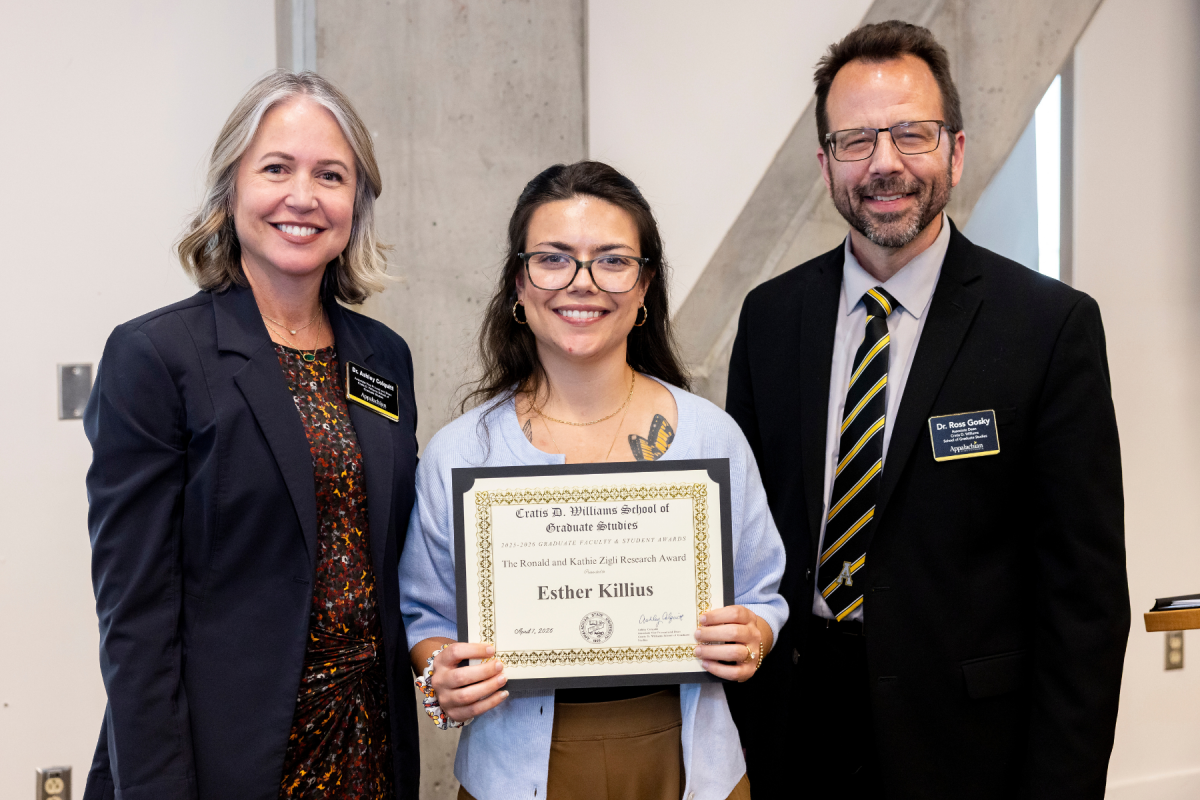
Esther Killius ’19, center, graduate student in the Doctor of Psychology in Clinical Psychology program, receives the Zigli Research Award at the Cratis D. Williams School of Graduate Studies Faculty and Student Awards Ceremony on Tuesday, April 7, 2026. (Photo by Kyla Willoughby)
Esther Killius ’19, graduate student in the Doctor of Psychology in Clinical Psychology (PsyD) program, received the award for her thesis project, titled “Study of Mental Health Professionals' Behavioral Intentions in Therapy and Assessment.” Killius is mentored by Dr. Katie Wolsiefer, assistant professor in the Department of Psychology.
Her nominator stated that she “is a wonderful student and collaborator and she has developed a strong research project with both personal and widespread potential benefits.”
Killius is passionate about becoming a therapist and providing the best possible quality of evidence-based care to her patients. She plans to specialize in working with members of the LGBTQ+ community. Her thesis will help her better understand the factors that will improve her care of transgender patients and may help her advocate for better training in her field.
Killius shared that her research matters because “we cannot assume that any of our guidelines or standards work for special populations without putting them to the test.” She shared, “My biggest hope with my project is that in some small way it leads to more research being conducted to improve psychological services to transgender individuals.”
###
About Graduate Education at App State
Appalachian State University’s Williams School of Graduate Studies helps individuals reach the next level in their career advancement and preparedness. The school offers 80 graduate degree and certificate programs — both in person and online — in a range of disciplines, including doctoral programs in education (EdD) and psychology (PsyD). The graduate school enrolls nearly 2,000 students. Learn more at graduate.appstate.edu.
By Lauren Gibbs
April 14, 2026
BOONE, N.C.
Three individuals smile for a photo. The middle individual is holding a certificate.

Cratis D. Williams School of Graduate Studies Dean Ashley Colquitt, left, and Associate Dean Ross Gosky, right, stand with mathematics graduate student Carleigh Scott ’22, center, recipient of the Outstanding Graduate Teaching Assistant Award, at the Faculty and Student Awards Ceremony on Tuesday, April 7, 2026. (Photo by Kyla Willoughby)