
BOONE, N.C. — Appalachian State University won the fifth annual BioBlitz, a weeklong citizen science competition that challenges participants to document biodiversity on university-owned properties using the iNaturalist platform. Held Sept. 21–27, the 2026 BioBlitz invited students, faculty, staff, and community members to record observations of wild plants, animals, fungi, and other organisms across App State properties.
Organized by App State's Department of Biology and Department of Geological and Environmental Sciences, the BioBlitz began in 2022 as a challenge between App State and UNC Greensboro. Since then, the event has expanded into a multi-campus competition. This year's participants included Appalachian State, UNC Asheville, UNC Charlotte, and UNC Wilmington.
The 2026 competition drew over 120 participants, who logged 6,200+ observations representing 1,300+ species across App State properties. App State's winning effort was led by participants across campus and the broader community. Among the top contributors was biology student Max Ramey, who recorded 827 observations and 459 species, the highest totals of the competition.
Ramey shared three of his favorite photos that he captured during BioBlitz:
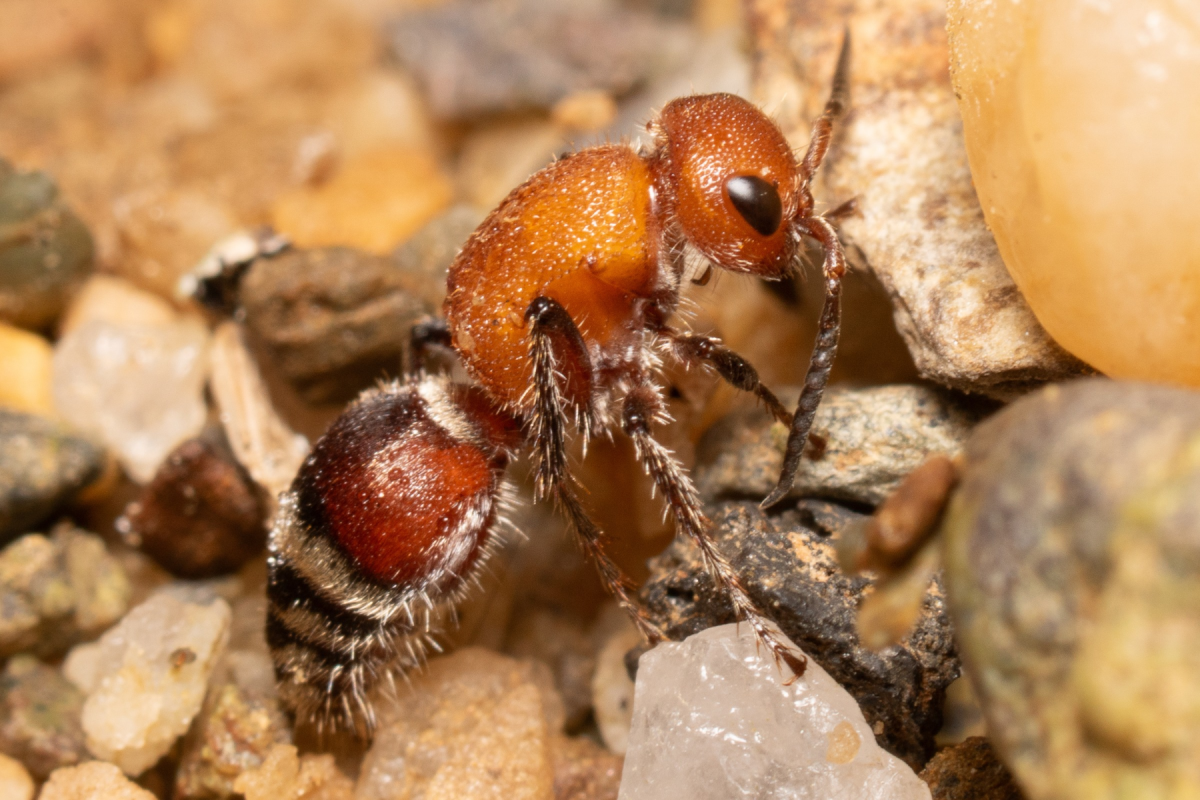
A Timulla species, captured by Max Ramey at App State's Broadstone property. "These are commonly referred to as velvet ants and are fairly hard to find in the mountains. Despite being called ants, they're actually flightless wasps," explained Ramey. "They're very cute but pack quite a sting. They aren't very aggressive, though, so you don't have to worry about getting stung unless you are actively handling one."
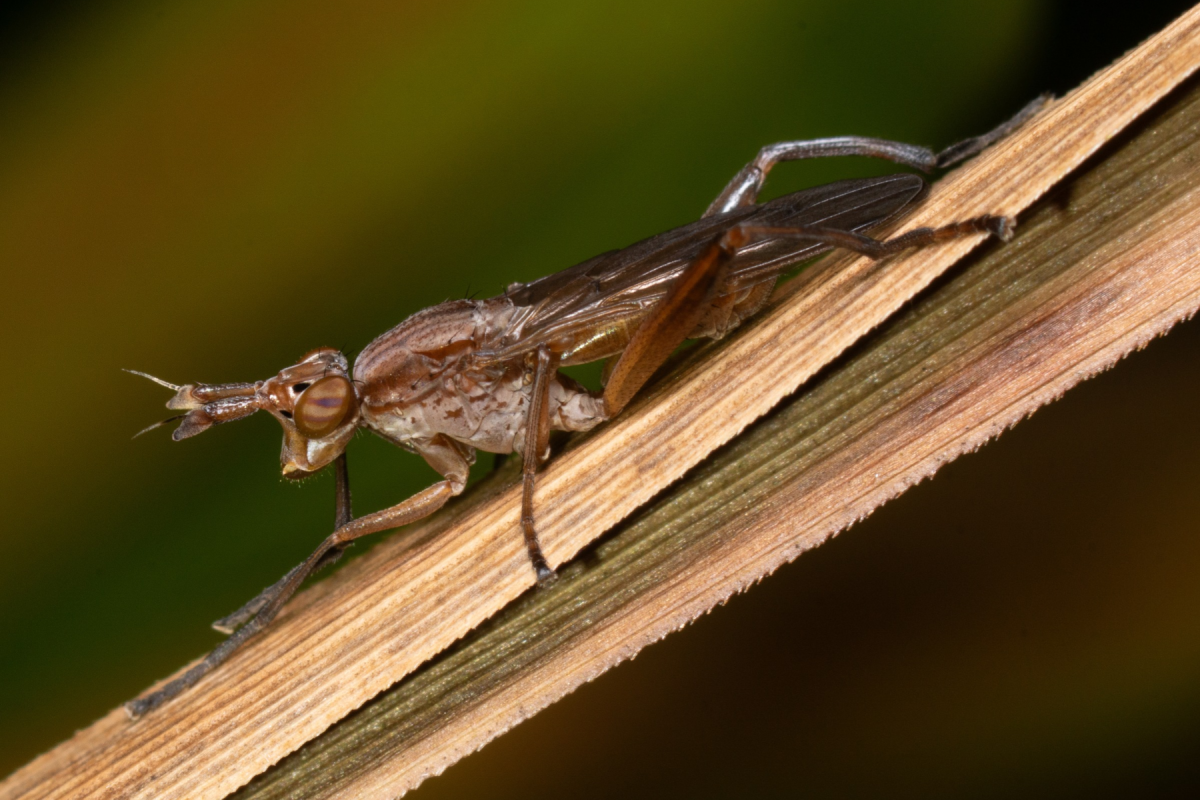
A snail-killing fly in the genus Sepedon, captured by Max Ramey near App State's Jim and Bettie Smith Stadium. "This was my first time seeing this genus. They are found in marshy areas, and their larvae hunt down and consume aquatic snails," shared Ramey. "The adults have a very unique look that I think is pretty awesome!"
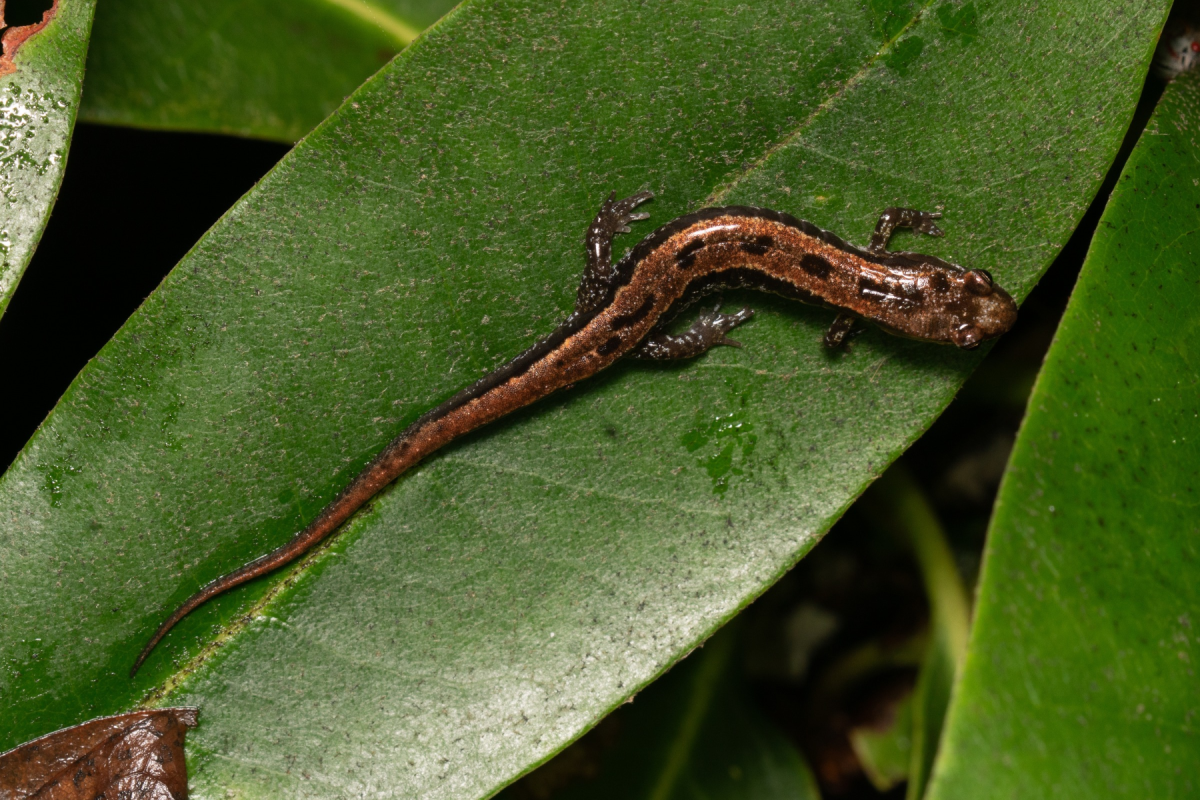
A Blue Ridge dusky salamander (Desmognathus orestes), photographed by Max Ramey during a wet night at App State's Nature Preserve. "This species is highly terrestrial for a Desmognathus salamander and can often be seen climbing low vegetation on wet nights far away from water, like this one is doing on a great rhododendron. Despite this behavior, they are tied to water for reproduction and overwintering and return to streams and seeps in the fall," explained Ramey. "This species is common on campus but is endemic to northwestern North Carolina and adjacent Tennessee and Virginia."
Beyond friendly competition, the BioBlitz generates data that help document biodiversity on App State properties. Organizers also use observations collected through the event for teaching, sustainability reporting, and tracking invasive species.
One of this year's most notable findings was the discovery of the Joro spider, an invasive species that has spread rapidly across the southeastern United States. Dr. Annkatrin Rose, associate professor in the Department of Biology and co-organizer of the BioBlitz, reported that participants recorded eight observations of Joro spiders on App State properties during this year's event, compared with no documented observations on those properties through 2025.
Native to East Asia, the Joro spider was first detected in the U.S. in 2014, in Georgia, and has continued expanding its range across the Southeast. While its arrival in the High Country was expected, the BioBlitz provided some of the first documentation that the species has become established on App State properties.
The finding highlights one of the event's broader benefits. In addition to engaging participants in hands-on citizen science, BioBlitz observations help track changes in local ecosystems and provide early evidence of environmental trends, including the arrival and spread of invasive species.
As App State celebrates another BioBlitz victory, the observations collected during this year's competition contribute to a growing record of biodiversity on university properties.
For additional coverage of this year's event, check out Brett Salisbury's story in The Appalachian.
###
About the Department of Biology
The Department of Biology is a community of teacher-scholars, with faculty representing the full breadth of biological specializations — from molecular genetics to landscape/ecosystem ecology. The department seeks to produce graduates with sound scientific knowledge, the skills to create new knowledge, and the excitement and appreciation of scientific discovery. Learn more about the Department of Biology
About the Department of Geological and Environmental Sciences
Located in Western North Carolina, Appalachian State University provides the perfect setting to study geological and environmental sciences. The Department of Geological and Environmental Sciences provides students with a solid foundation on which to prepare for graduate school or build successful careers as scientists, consultants, and secondary education teachers. The department offers six degree options in geology and two degree options in environmental science. Learn more about the Department of Geological and Environmental Sciences
By Lauren Gibbs
October 26, 2026
BOONE, N.C.
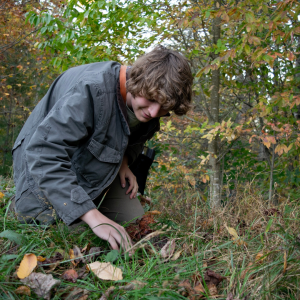
A person in a gray jacket kneels in the woods, looking down at the ground.
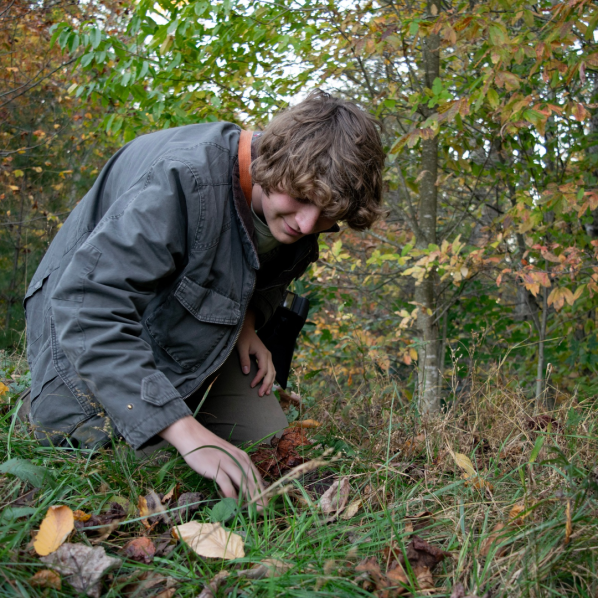
Biology student Max Ramey recorded 827 observations and 459 species during this year's BioBlitz, the highest totals of the competition. Photo by Aly Lee