
BOONE, N.C. — An Appalachian State University-led effort to bring cutting-edge neuroscience research into undergraduate classrooms will partner with a new $19 million national initiative focused on mapping and analyzing the brain's intricate structures.
Dr. Andrew Bellemer, associate professor of molecular neuroscience and assistant chair of faculty administration in Appalachian State University's Department of Biology, leads Connectomes for Undergraduate Neuroscience Education and Learning (CUNEL), a five-year project supported by the National Science Foundation (NSF). CUNEL will serve as an educational partner for the newly announced National Connectomics and Ultrastructure Volume Observatory (NCUVO), led by the University of Vermont (UVM).
The NSF is providing $19 million over five years to establish NCUVO, which will combine high-throughput electron microscopy, artificial intelligence, and advanced computing to produce and analyze detailed three-dimensional biological data. Led by UVM neuroscientist Dr. Davi Bock, the project aims to make advanced imaging capabilities accessible to researchers nationwide.
For Bellemer, the partnership presents an opportunity to ensure the new data sets generated by the observatory also reach undergraduate students. "The NSF project I lead at App State, CUNEL, will partner with this UVM project to get all of the new data into undergraduate lab courses," shared Bellemer.
NCUVO will expand the scale of connectomics research, which maps and analyzes connections within nervous systems. The observatory will generate data sets measured in petabytes, or millions of gigabytes, to investigate questions ranging from learning and memory to visual systems across species.
The partnership builds upon work Bellemer and his colleagues have conducted through CUNEL since 2022. The project trains undergraduate neuroscience instructors to incorporate authentic connectomics research into their courses, allowing students to work with the same large-scale data and analysis tools used by professional scientists.
Bellemer has advanced that work through several national collaborations. This summer, Bellemer's team developed and led the "Incorporating Open Connectomics Data into Teaching Neuroscience" workshop at the Allen Institute in Seattle, Washington. Held July 23-24, the workshop trained undergraduate neuroscience educators to use the mouse visual cortex connectome in the open-access MICrONS data set to teach concepts including neuroanatomy, brain ultrastructure, and synaptic connectivity. Participants also gained experience navigating 3D electron microscopy data and integrating code-based connectome analysis into their courses.
The workshop grew out of Bellemer's work with the High-throughput Integrative Electron Microscopy (HIVE) Center, a $33 million National Institutes of Health-funded collaboration, in which he serves as a principal investigator. As part of HIVE, Bellemer and collaborators Dr. Ken Colodner of Mount Holyoke College and Dr. Divya Sitaraman of California State University, East Bay, are developing educational materials and workshops to bring connectomics data into undergraduate classrooms.
Bellemer will continue that outreach on Oct. 13, when he facilitates the Society for Neuroscience webinar "Connecting to Connectomes." The webinar will provide current and future faculty members with tools to incorporate connectomics data and analyses into their teaching and research, with topics including the use of fruit fly, mouse, and human brain data in undergraduate courses.
Together, these efforts are helping move cutting-edge connectomics research beyond the laboratory and into the classroom, where it can help prepare the next generation of scientists.
###
About the Department of Biology
The Department of Biology is a community of teacher-scholars, with faculty representing the full breadth of biological specializations — from molecular genetics to landscape/ecosystem ecology. The department seeks to produce graduates with sound scientific knowledge, the skills to create new knowledge, and the excitement and appreciation of scientific discovery. Learn more about the Department of Biology
By Lauren Gibbs
October 8, 2026
BOONE, N.C.
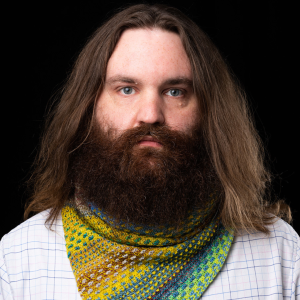
Studio portrait of a long-haired man with a thick beard, wearing a bright yellow, blue, and green knitted scarf over a checked shirt, against a black background.
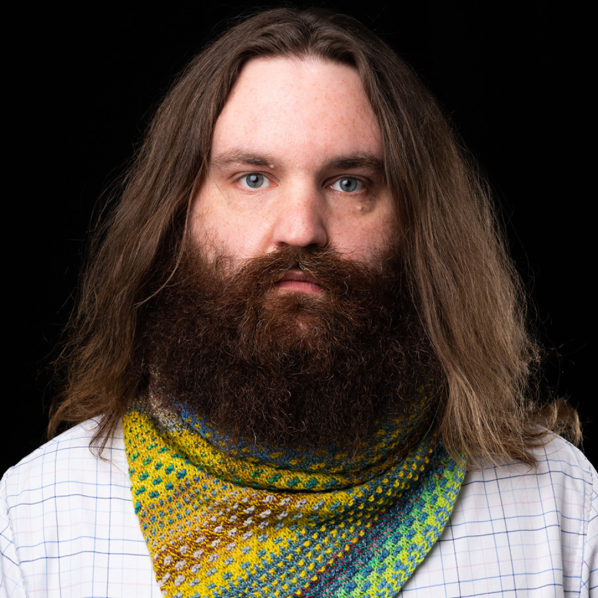
Dr. Andrew Bellemer is an associate professor of molecular neuroscience and the assistant chair of faculty administration in Appalachian State University's Department of Biology. Photo by University Communications